

Labyrinths are a fun thing to draw, and they make a calm, repeatable doodle. I came across them while researching our The Golden Ratio in Art post, and they’re easy to start and easy to take further.
Here’s how to draw a labyrinth in three sizes (3, 7, and 11 circuits), what makes it different from a maze, and what to do with your drawing: color it, doodle on it, or trace it as a mindfulness exercise. Ages 8 and up can follow the steps on their own; younger kids can trace one you’ve drawn. All you need is paper, a pencil, and a marker.
What Is a Labyrinth? (It’s Not a Maze)
A labyrinth looks like a maze, but it has no dead ends or choices. It is one winding path that leads to the center and back out, so you can’t get lost. That is the point: because you don’t have to solve anything, the walk is calming. A “circuit” is one complete ring of the path around the center, so a 7-circuit labyrinth has seven rings.
Many people trace the path of a small labyrinth drawing with a finger as a relaxing, mindfulness-style exercise. Labyrinth designs are very old and have turned up in places like churches, hospitals, schools, and parks. It’s hard to pinpoint exactly where and how they began; if you want to dig into it, a search for the history is a good place to start.
How Do You Draw a Labyrinth?
Draw a 3 Circuit Labyrinth
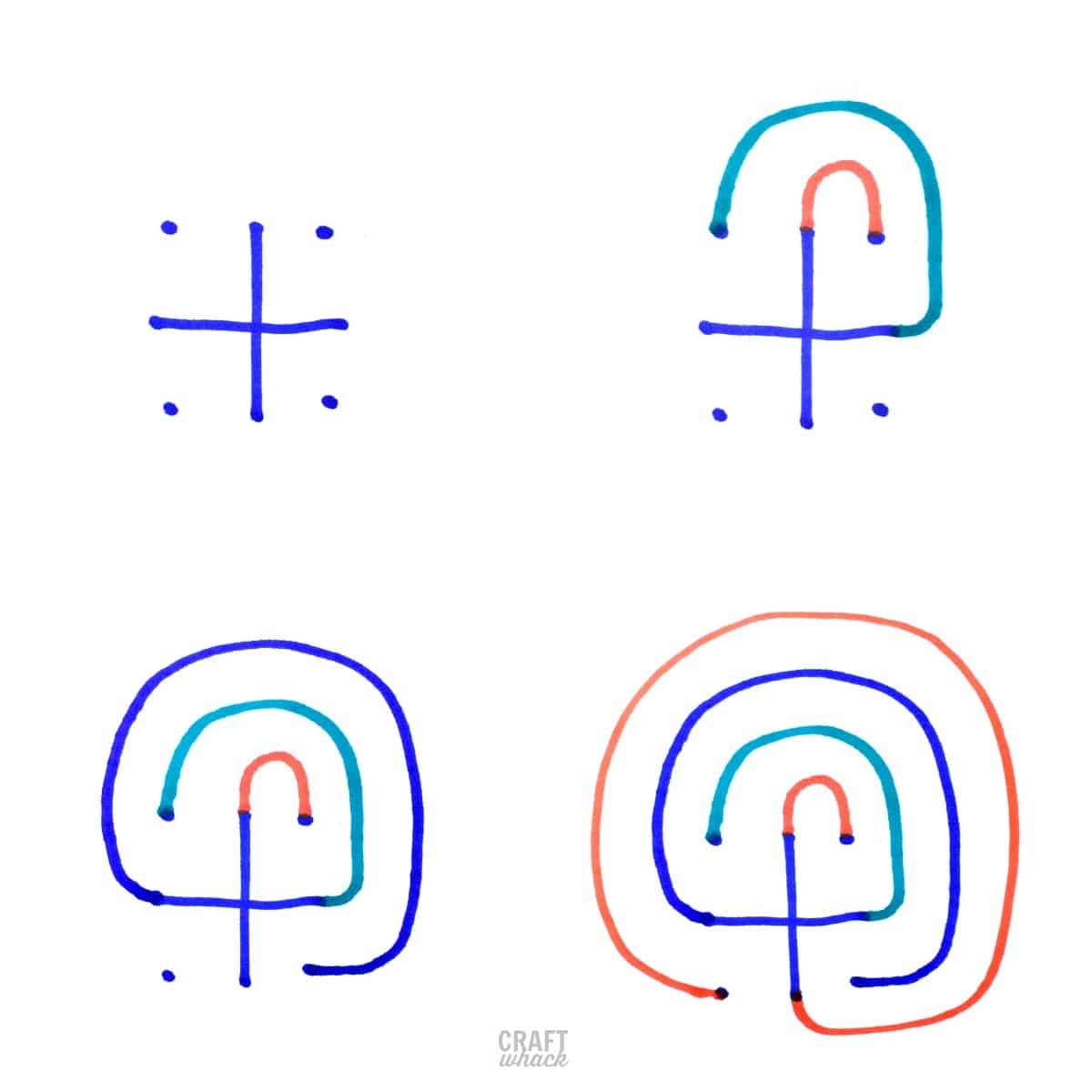
This is the simplest labyrinth. It takes about 5 minutes. You need paper and a pencil.
- Draw a small plus sign (a cross) on your paper, about a third of the way down the page, leaving space above it.
- Put a dot in each of the four corners, as if the plus sign sat in the middle of a square.
- Draw an upside-down “u” connecting the top of the plus to the dot on the upper right.
- Connect the dot on the upper left over to the right arm of the plus.
- Connect the right arm of the plus to the dot on the lower right.
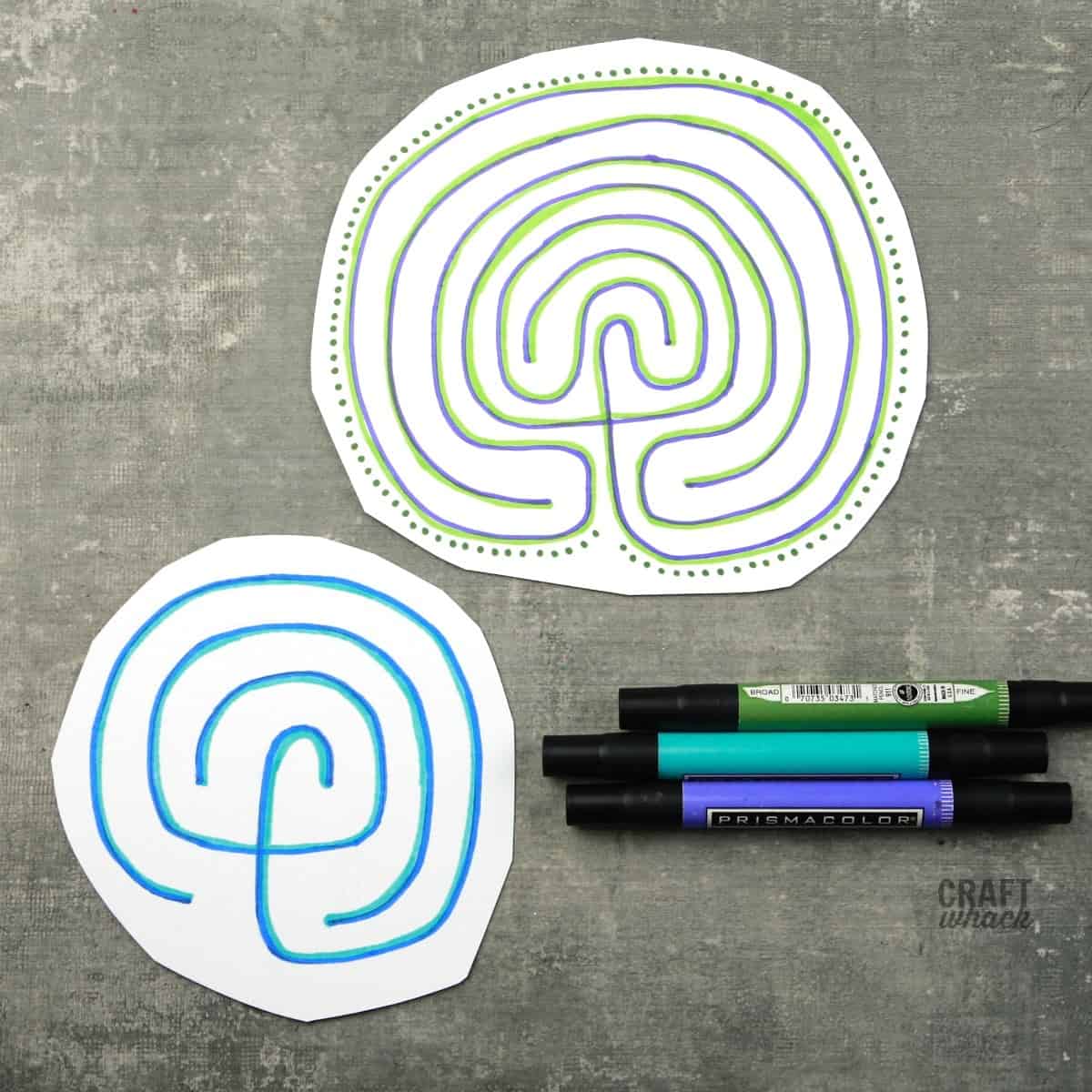
- Connect the dot on the lower left to the bottom of the plus. Compare your drawing with the photo above; you should see three separate rings around the center.
Draw a 7 Circuit Labyrinth
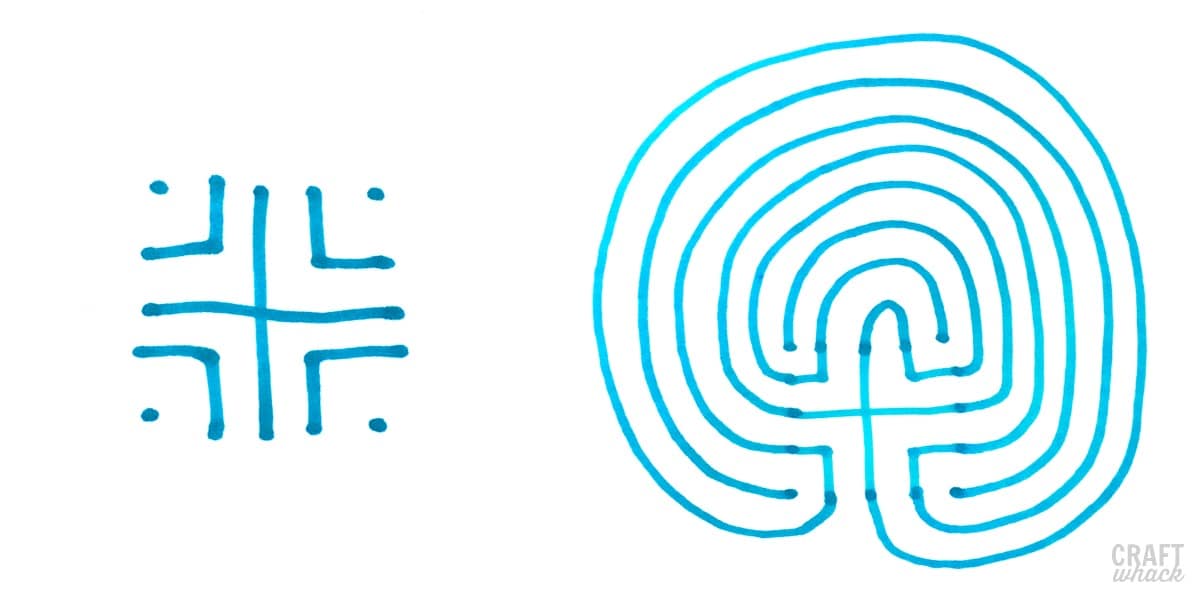
This is the classic labyrinth most people picture, and it is more fun to color and decorate. The method is the same as the 3-circuit, but you start from a bigger seed pattern: the plus sign, a dot in each corner, and a small “L” shape in each of the four quadrants. Then work clockwise, always connecting the next open end on the left side to the next open end on the right, until every line is joined.
Place the plus sign lower on the page than in the 3-circuit version, because the rings build up mostly above and around it.
Draw an 11 Circuit Labyrinth
This one is bigger, so scale down if you’re on regular letter or A4 paper. I use white card stock, which takes pencil and marker without bleeding through.
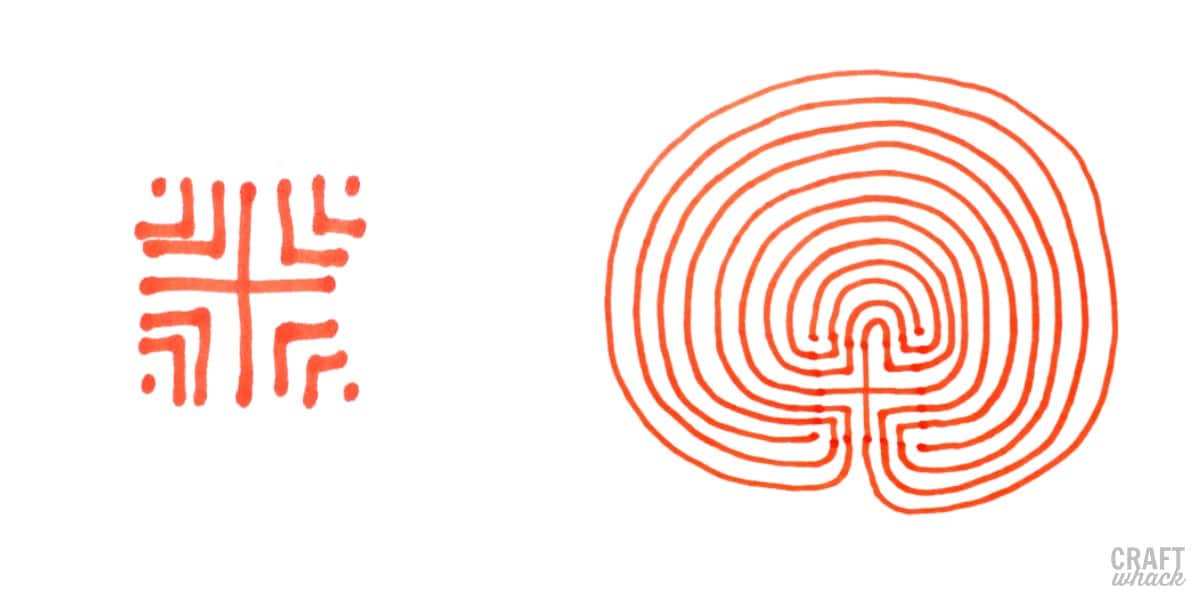
Tip: Draw the labyrinth in pencil first and then go over it with marker. The lines look smoother, and you can curve the corners at the center of the plus so the whole labyrinth flows.
Some people alternate the direction of the lines (left to right, then right to left). It’s fine either way; drawing every line left to right is simpler to remember.
Labyrinth As Art Project
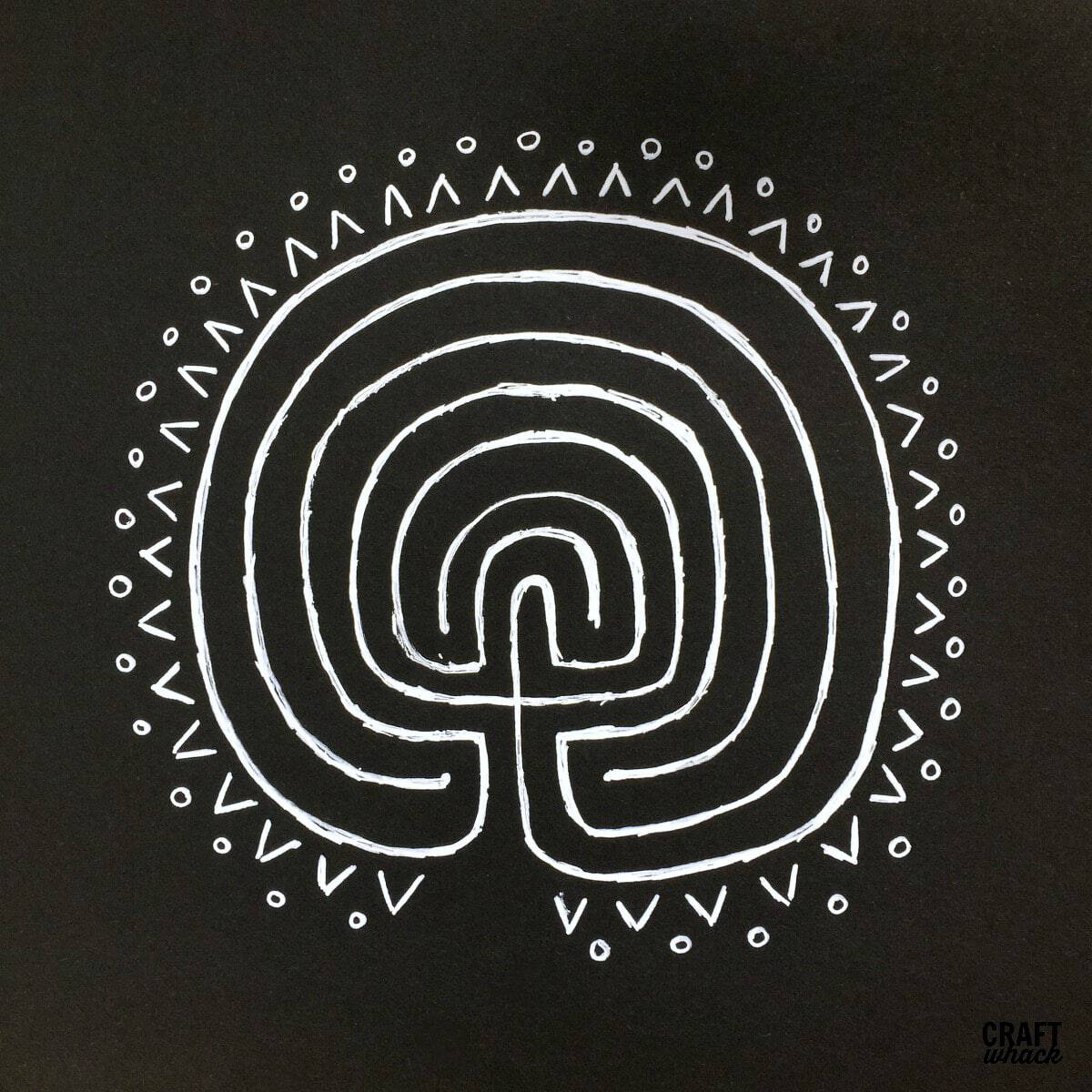
Once you know how to draw a labyrinth, color it and doodle on it. Try markers, or a white gel pen on black paper (gel pens skip a little, which gives a sketchy look). You can also cut finished drawings out as rounds.
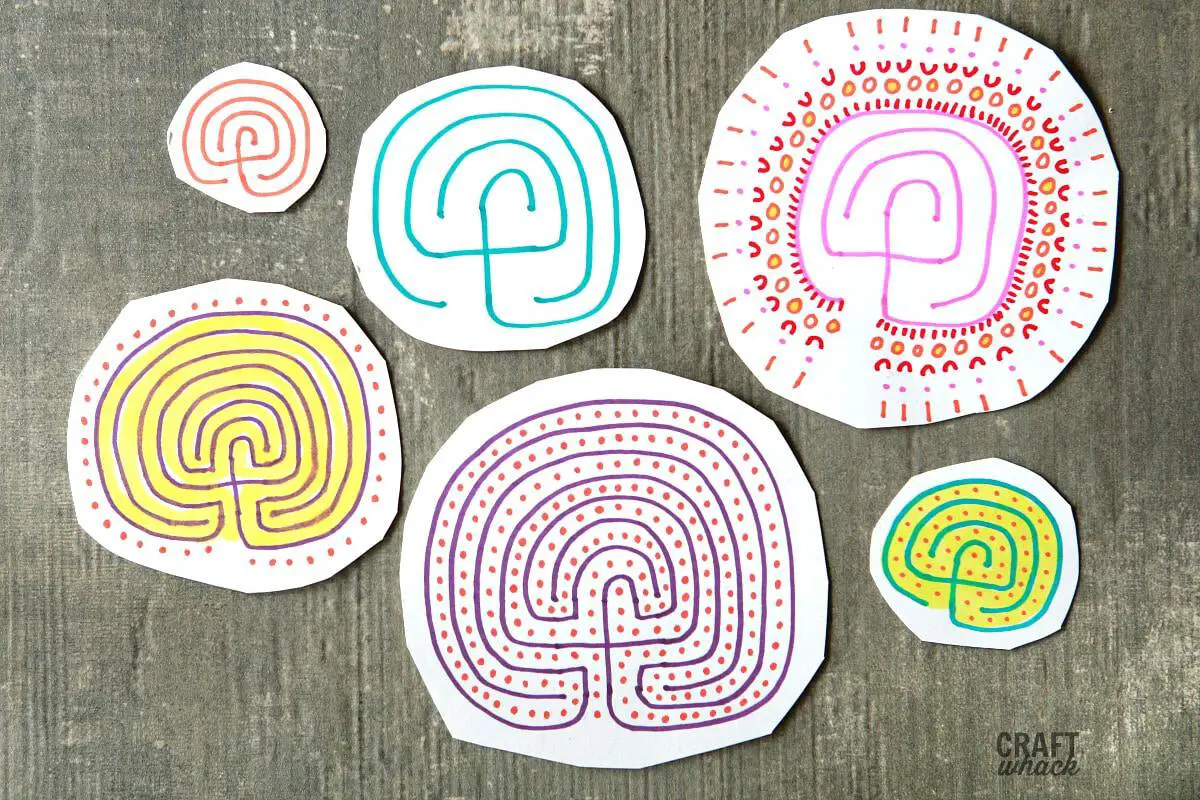
Here are some drawn in pencil first:
A white gel pen on black paper:
Make a Walkable Labyrinth
You can also make a labyrinth big enough to walk. Draw one in the sand, or use rocks or shells for the walls. If you’re on a beach, use only what’s already there and leave no trash, because the tide will wash it away. This tutorial shows how to make a stone labyrinth for your yard.
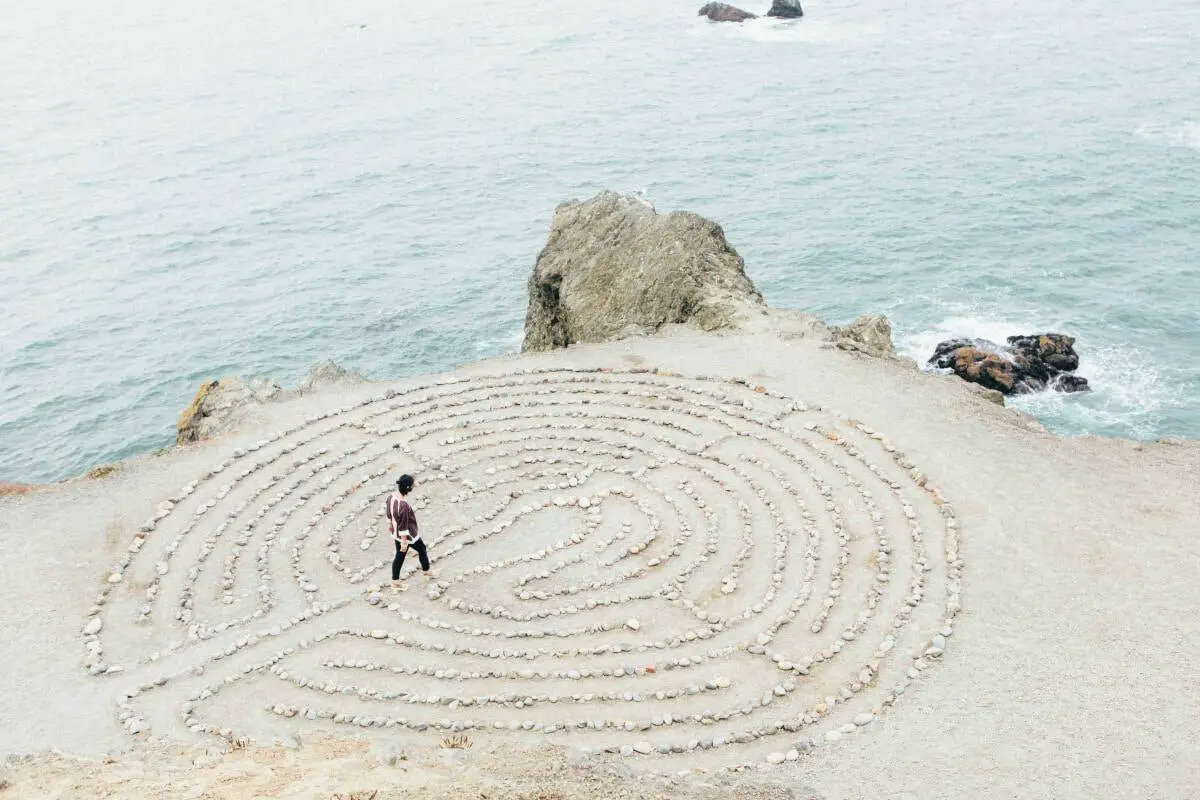
A giant rock labyrinth on the beach is fun to imagine, even knowing the water will wash it away.
What to Do With Your Drawn Labyrinth
- Meditate or pray, using it as a tool for focus.
- Make art labyrinths: color, doodle, or cut them out.
- Use it as decoration. Labyrinths have long been used as decorative motifs, and you can use the shape in printing, stamping, sewing, carving, and bullet journal borders.
How to Do a Labyrinth Meditation (How Do You Walk a Labyrinth?)
Walking a labyrinth is simple: follow the one path to the center, pause, and walk back out. A drawn labyrinth works with a finger instead of your feet.
- Place your labyrinth drawing in front of you on a table.
- Using your finger, slowly trace the path from the outside to the center. (Some people say using the pointer finger of the non-dominant hand helps focus.)
- Keep your breathing slow and steady, and focus only on your finger tracing the path.
- Pause at the center and take a few deep breaths.
- Trace the path back out, still breathing slowly.
- Sit quietly for a moment and notice your thoughts. Write or draw if you like.
A common way to think about a walk is the “three R’s”: release (let go of distractions on the way in), receive (pause at the center), and return (walk back out).
Decorative Labyrinths
People have designed with labyrinth-inspired shapes for centuries. Use them as borders for a bullet journal, work them into doodles, stamp them onto cards or fabric, or paint them on a wall.
If you’d rather buy one, here are some options from Etsy makers. Prices and availability change, so check the listings.
Bamboo Finger LabyrinthBuyWood Labyrinth NecklaceBuyCarved Stone LabyrinthBuyChartres Sand LabyrinthBuy
To learn more, spend some time on The Labyrinth Society site. They also have a labyrinth locator, so you can find one near you to walk.
Books About Labyrinths
Here are two books on labyrinths: a construction manual by Robert Ferre, and “Way of the Winding Path” by Eve Eschner Hogan, which uses the labyrinth as a metaphor for life.
Classical Labyrinths: Construction ManualBuyWay of the Winding Path: A Map for the Labyrinth of LifeBuy
Materials for Drawing Labyrinths
White card stock
Prismacolor markers
Sharpies
Bic Permanent Markers
Comments
0 comments